

Index Guide
1. The Concept and Importance of Energy Management
Energy management refers to the planning, monitoring, and optimization of energy use across all building systems. It ensures energy is used efficiently while minimizing waste and cost. Modern buildings account for a large portion of global energy consumption, making energy control a critical issue.
In the past, energy efficiency meant simply choosing better lighting or heating systems. Today, energy management extends to the building’s design, materials, mechanical systems, and even occupant behavior.
2. Smart Technologies and the Energy Revolution
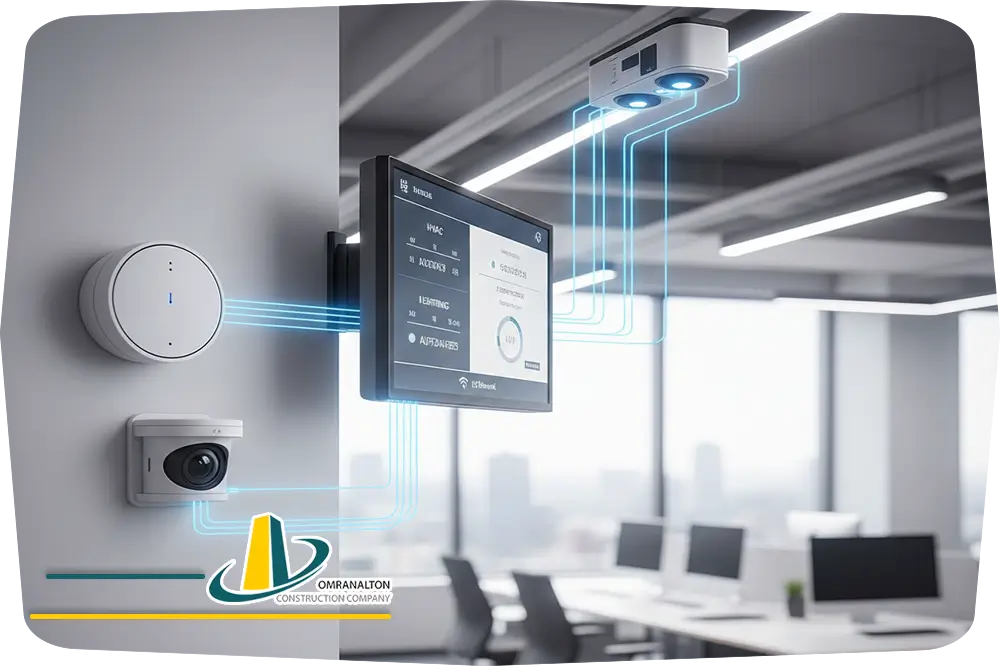
One of the key tools in energy management is the Building Management System (BMS). These systems, connected to sensors in lighting, ventilation, heating, security, and elevators, collect real-time data to make intelligent energy decisions.
For instance, when fewer people are in a room, ventilation automatically decreases; when there is enough natural light, artificial lights dim or switch off.
Meanwhile, the Internet of Things (IoT) adds another layer of intelligence—allowing devices to communicate with each other and optimize energy use across the entire building.
3. Managing Energy from Design to Operation
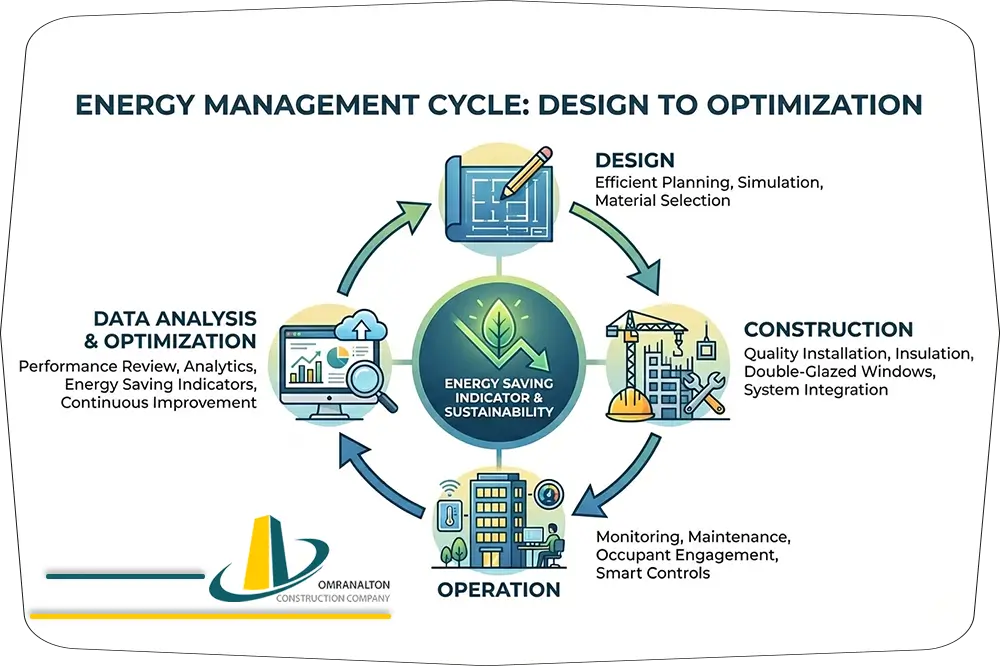
Energy management begins at the design stage. Proper orientation toward sunlight, double-glazed windows, insulated materials, and natural ventilation all help reduce energy consumption.
During construction, the use of energy-efficient equipment, LED lighting, and smart controls ensures long-term building efficiency.
Once operational, analytical tools and energy monitoring software continuously track consumption, providing real-time recommendations for optimization
4. Economic and Environmental Benefits
Energy management systems offer significant benefits. Economically, less energy consumption means lower operational costs. Environmentally, it reduces greenhouse gas emissions and reliance on fossil fuels.
Additionally, well-managed systems extend the life of building equipment by preventing unnecessary strain.
OmranAlton designs projects that balance cost efficiency with environmental responsibility, creating structures that are both intelligent and sustainable
5.Challenges and Solutions in Iran
In Iran, buildings account for a major share of total energy use. Given the country’s diverse climate, energy management is more crucial than ever. The main challenges are lack of awareness and limited smart infrastructure.
However, with the growth of companies like OmranAlton, which integrate advanced technologies into design and execution, the construction sector is steadily moving toward smarter and more efficient practices.
Key solutions include training specialists, using analytical software, climate-oriented design, and promoting investment in green technologies.
6. OmranAlton Approach
OmranAlton, with extensive experience in civil, healthcare, and building projects, has adopted a comprehensive approach to energy management. This includes smart structural design, use of BMS systems, and adherence to strict energy standards throughout every project phase.
The goal is not only cost reduction but also creating buildings that coexist harmoniously with the environment while enhancing user comfort. Recent projects feature intelligent ventilation, optimized natural lighting, and low-energy materials—showcasing what the future of Iranian construction can look like.
7. Conclusion
Energy management bridges technology, economy, and the environment. The building of the future is one that thinks, adapts, and harmonizes with human and natural needs.
Through innovation, expertise, and environmental responsibility, OmranAlton is shaping a new path for .Iran’s construction industry—a path toward smarter, more sustainable, and greener buildings
6. Frequently Asked Questions (FAQ)
Q1: Why is energy management important in buildings?
Because smart energy use reduces costs, conserves natural resources, and improves building system performance.
Q2: What is a Building Management System (BMS)?
A BMS is a system that intelligently controls various building functions, such as lighting, HVAC, security, and energy usage.
Q3: What is OmranAlton’s role in this field?
OmranAlton uses modern technologies to design projects where energy consumption is optimized and intelligent.
Q4: What are the benefits of implementing these systems?
Financial savings, longer equipment lifespan, reduced environmental impact, and improved occupant comfort.
Q5: Are these technologies applicable in Iran?
Yes, given the advancement of technical infrastructure and companies like OmranAlton, implementing smart systems is entirely feasible.


